The first thing I do when I take over a creative team isn't review the portfolio. It's map the workflow — because the work is only as good as the system behind it. After building and leading in-house creative studios across B2B enterprise, consumer loyalty, and brand-focused organizations, I've learned that the difference between a team that ships good work and one that ships great work almost never comes down to talent. It comes down to structure.
Why "In-House" Is Having a Moment
The shift toward in-house creative teams has been building for years, but in 2026 it's reached an inflection point. Brands want more control over their narrative, faster turnaround, and deeper institutional knowledge than agency relationships typically provide. But building an in-house studio that actually delivers on that promise? That's where most organizations struggle.
The challenge isn't hiring designers and writers. It's creating an environment where creative talent thrives — with the right processes, tools, and culture to produce consistently excellent work without burning out.
"A creative studio isn't a department. It's an operating system — and the output is only as good as the system you build."
Step 1: Map the Workflow Before You Touch the Work
Before I redesign a single template or hire a single contractor, I audit the existing workflow end-to-end. Where do briefs come from? How are they triaged? What does the approval chain look like? Where do projects stall? The answers reveal everything.
In one organization, I discovered that 40% of creative time was being consumed by revision cycles caused by vague briefs and misaligned stakeholder expectations. The fix wasn't better designers — it was a standardized creative brief template and a mandatory kickoff meeting. That single change reduced revision rounds by half.
Step 2: Build Psychological Safety First
Creative work requires vulnerability. Presenting a concept to a room full of stakeholders is an act of professional courage. If your team doesn't feel safe taking risks — proposing bold ideas, pushing back on mediocre briefs, admitting when something isn't working — you'll get safe, forgettable work.
I prioritize psychological safety above almost everything else when building a team. That means protecting creative time, celebrating intelligent failures, giving credit publicly, and creating space for honest feedback without fear of punishment. The ROI on this isn't abstract — it shows up in the work, in retention, and in the awards.
Step 3: Systematize Everything Except the Ideas
This is the principle that unlocked everything for me. Creative energy is finite and precious — it should be spent on ideation, storytelling, and craft. Everything else should be systematized:
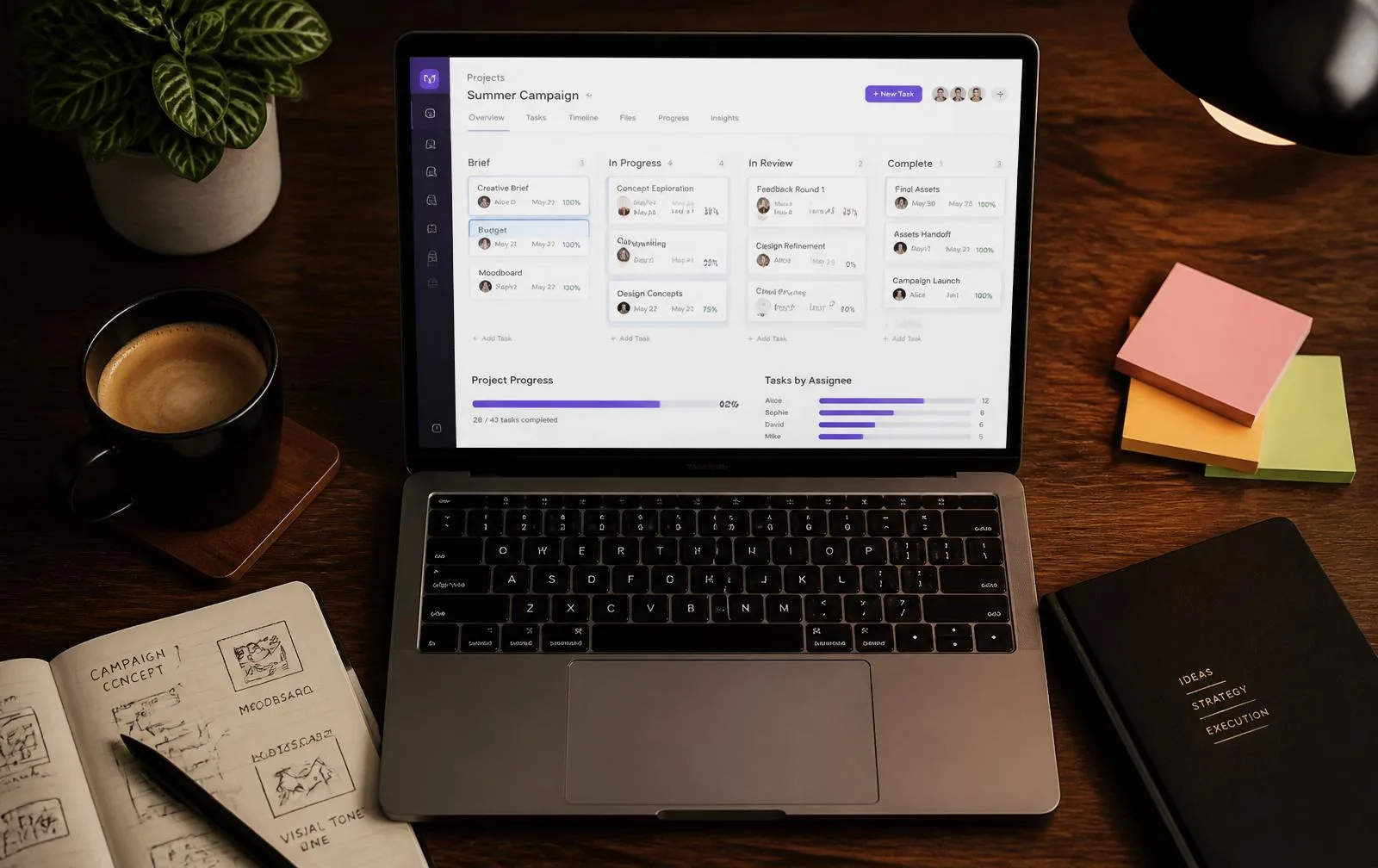
- →Project management in Wrike with standardized workflows, proofing, and cross-functional visibility
- →Template libraries for recurring deliverables — emails, landing pages, social — so the team starts at 60% instead of zero
- →QA checklists that catch errors before stakeholders do, building trust and reducing revision cycles
- →Brand governance documents that empower decisions without requiring creative director approval on every detail
The result: 40% faster delivery times and a team that could focus on the creative challenges that actually required their expertise.
Step 4: Integrate AI as a Force Multiplier
AI isn't a replacement for creative talent — it's a force multiplier for creative teams that know how to use it. I've integrated AI into our workflows for ideation acceleration, content variation at scale, visual prototyping, and data-driven optimization. The key is treating AI as a collaborator, not a shortcut.
The teams that get the most from AI are the ones with the strongest creative foundations. AI amplifies what's already there — if you have great strategy and sharp taste, AI helps you execute faster. If you don't, AI just helps you produce mediocrity at scale.
Step 5: Build the Sprint
The 7-week Creative Sprint methodology I developed became the operating rhythm for every major campaign. It provides enough structure to keep projects on track and enough creative space to produce genuinely excellent work. The sprint has three phases:
Kickoff & Discovery
Client discovery, participant journey mapping, creative brief development, KPI alignment. Define success before touching design tools.
Creative Development
Research, competitive analysis, strategic creative exploration. Multiple directions, client collaboration, purposeful iteration.
Production & Launch
Final asset production across all channels. QA, stakeholder approval, launch coordination. Every deliverable polished and on-brand.
The Results Speak
Using this approach, the studios I've built have delivered:
Creative Awards
Program Results
Faster Delivery
Campaign ROI
But the metric I'm most proud of isn't on that list — it's the team members who've told me they did the best work of their careers. That's what happens when you build a studio that values people as much as output.
What I'd Tell You If You're Building One
If you're standing up an in-house creative studio — or inheriting one that needs a reset — here's the playbook in five lines:
- Map the workflow first. You can't fix what you can't see. Audit every step from brief to delivery before making changes.
- Invest in safety before speed. A team that feels safe will outperform a team that feels pressured, every time.
- Systematize the repetitive. Free your team's creative energy for the work that actually requires it.
- Treat AI as a teammate. Train your team to use it, set quality gates, and measure the impact.
- Build the sprint. A repeatable creative rhythm is the foundation of consistent excellence.
The Bottom Line
Building a creative studio from scratch is one of the hardest and most rewarding things you can do as a creative leader. It's not about having the best talent on paper — it's about creating the conditions where good people do extraordinary work. The system is the strategy. Build it right, and the work takes care of itself.
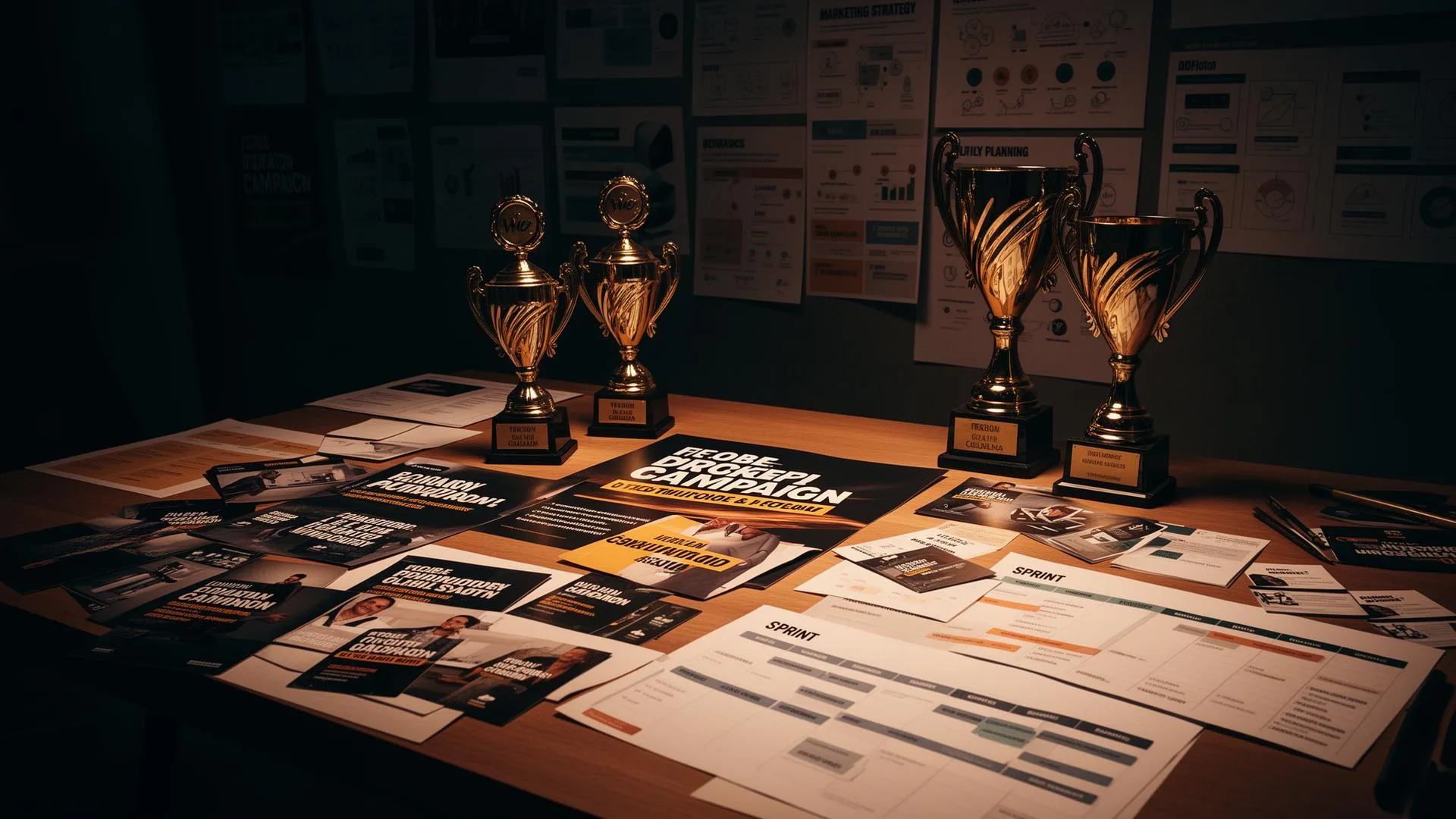
52 awards, $6.6M in program results, and a team that shipped 2.49M campaigns later — I can tell you with certainty: it starts with the workflow, not the portfolio.
About the Author
Jamie Ahlstedt
Jamie is an award-winning Creative Director with 15+ years building in-house creative studios across B2B enterprise, consumer, and brand environments. She specializes in the intersection of creative strategy, operational systems, and AI-powered workflows. Her work has earned 52+ industry awards including Hermes Platinum & Gold, Communicator Awards of Excellence, and MarCom Awards.